January 30th, 1972 stands as one of the deadliest – and significant – occasions during three decades of violence in Northern Ireland.
Within the community where events unfolded – the images of that fateful day are visible on the structures and embedded in public consciousness.
A public gathering was held on a chilly yet clear afternoon in Derry.
The protest was a protest against the policy of internment – holding suspects without trial – which had been implemented in response to multiple years of conflict.

Military personnel from the specialized division killed 13 people in the district – which was, and continues to be, a strongly nationalist area.
One image became particularly iconic.
Images showed a Catholic priest, Fr Edward Daly, displaying a blood-stained fabric in his effort to protect a crowd moving a youth, Jackie Duddy, who had been fatally wounded.
Journalists captured considerable film on the day.
Documented accounts includes the priest informing a journalist that soldiers "just seemed to fire in all directions" and he was "completely sure" that there was no provocation for the gunfire.

The narrative of events wasn't accepted by the initial investigation.
The initial inquiry found the Army had been attacked first.
In the negotiation period, the ruling party established another inquiry, following pressure by family members, who said the first investigation had been a inadequate investigation.
That year, the conclusion by the inquiry said that overall, the soldiers had discharged weapons initially and that none of the victims had posed any threat.
The then head of state, David Cameron, apologised in the Parliament – declaring killings were "without justification and unjustifiable."

The police commenced look into the matter.
One former paratrooper, referred to as the defendant, was charged for murder.
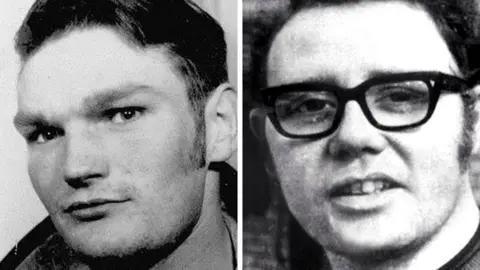
Accusations were made concerning the deaths of the first individual, twenty-two, and 26-year-old the second individual.
Soldier F was also accused of trying to kill several people, additional persons, further individuals, Michael Quinn, and an unnamed civilian.
There is a legal order protecting the defendant's identity protection, which his lawyers have argued is essential because he is at threat.
He told the investigation that he had only fired at individuals who were armed.
This assertion was dismissed in the concluding document.
Evidence from the investigation would not be used straightforwardly as proof in the criminal process.
During the trial, the defendant was screened from view behind a privacy screen.
He spoke for the initial occasion in the proceedings at a proceeding in December 2024, to reply "innocent" when the accusations were read.

Kin of the victims on that day made the trip from the city to Belfast Crown Court daily of the proceedings.
One relative, whose brother Michael was died, said they always knew that attending the trial would be painful.
"I remember all details in my recollection," he said, as we walked around the main locations mentioned in the case – from the location, where the victim was shot dead, to the adjacent the courtyard, where one victim and William McKinney were died.
"It returns me to my position that day.
"I helped to carry Michael and lay him in the vehicle.
"I went through the entire event during the evidence.
"Notwithstanding having to go through the process – it's still valuable for me."